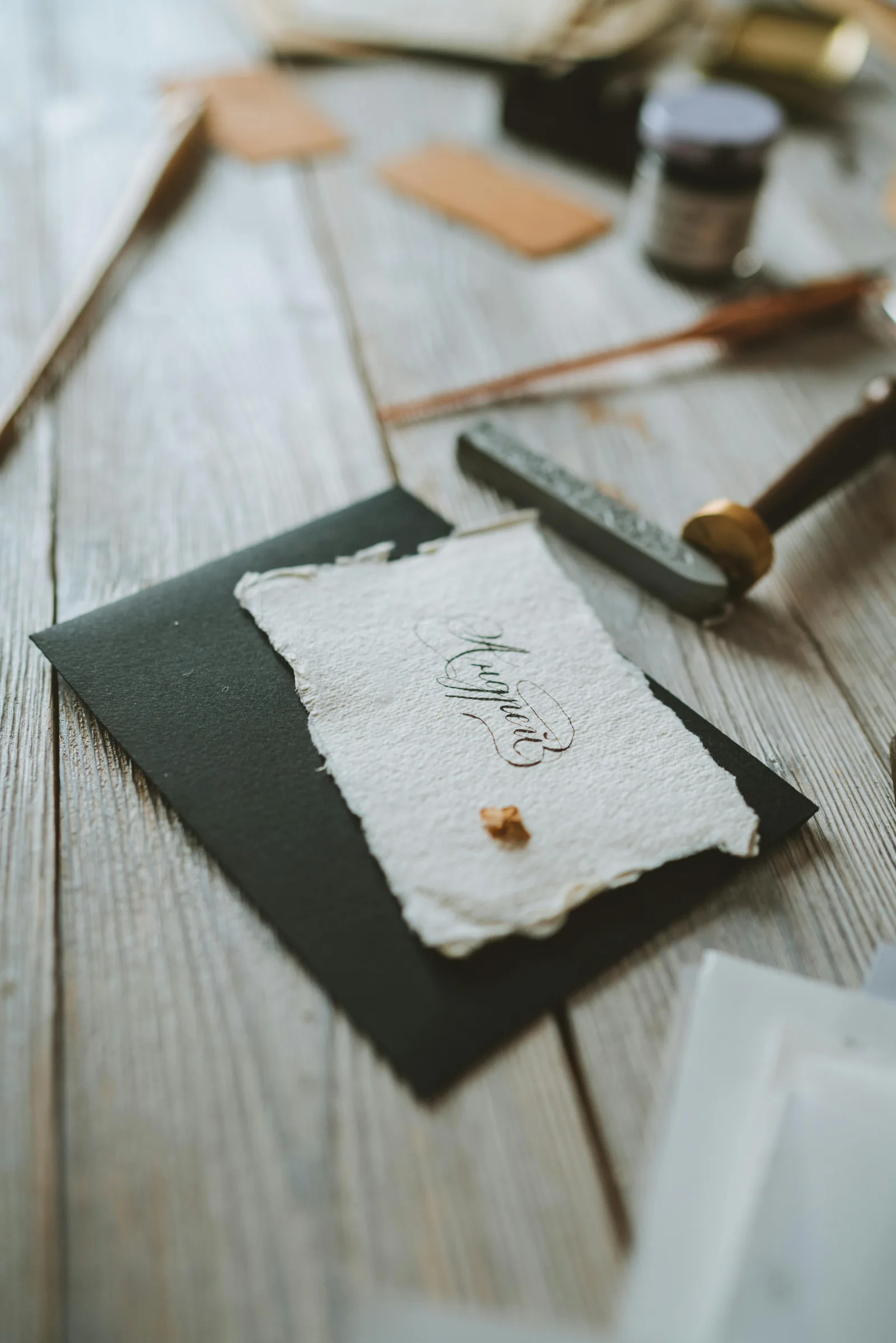
Can Wedding Invitations Really Be Zero-Waste?
By Editorial Team | Updated August 2026
What This Guide Covers
- What "zero-waste" actually means when applied to wedding invitations.
- Where the waste in traditional invitation suites really comes from.
- Materials, formats, and printing choices that get couples close to zero-waste.
- How couples and stationers are rethinking invitations without losing the celebration feel.
- Practical steps any couple can take, regardless of budget or timeline.
Wedding invitations are often the first physical object a guest holds that represents the celebration to come. They are also, for many couples now planning greener weddings, one of the first places where sustainability questions get uncomfortable. A single envelope, a card, an RSVP insert, and a stamp seem small on their own. Multiplied across a guest list of a hundred or more, they add up to a surprising amount of paper, ink, plastic, and postage that is used once and then thrown away.
This guide looks at whether "zero-waste" wedding invitations are a realistic goal or mostly a marketing phrase. It walks through where invitation waste actually comes from, which materials and formats meaningfully reduce it, and what trade-offs couples should expect if they want their invitations to match the values of the rest of their wedding.
What Does "Zero-Waste" Actually Mean Here?
True zero-waste is a difficult standard for any printed product to meet completely. Ink has a chemical footprint, paper production uses water and energy, and shipping anything by mail involves fuel. When stationers or couples describe invitations as zero-waste, they usually mean something closer to "close to zero-waste" or "waste-conscious": the product leaves behind little or no landfill trash, avoids materials that cannot be composted or recycled, and is produced and delivered in a way that keeps its footprint as small as realistically possible.
That distinction matters because it sets expectations correctly. A couple choosing plantable seed paper invitations is not eliminating their environmental impact entirely, but they are removing several of the biggest waste sources in a standard invitation suite: the coated cardstock, the plastic-lined envelope, the foil accents that cannot be recycled, and the paper RSVP card that gets discarded after the count is taken.
Where Invitation Waste Actually Comes From
A typical formal wedding invitation is not one piece of paper but a small stack. There is the invitation card itself, often on heavy stock, plus a separate RSVP card with its own tiny return envelope. Details cards, reception cards, and directions inserts add more layers. Each piece is usually printed with a design proof, meaning a percentage of every order is discarded before it ever reaches a mailbox due to color mismatches or printing errors.
Packaging compounds the problem. Many invitation suites arrive wrapped in tissue paper, ribbon, or plastic sleeves meant to keep the set pristine during shipping, none of which serves any purpose once the envelope is opened. On the guest side, most invitations are read once, kept briefly on a refrigerator or bulletin board, and then thrown away after the wedding date passes. Foil stamping, glitter, and laminated finishes, popular for their visual impact, are typically not recyclable and cannot be composted, so they end up in general waste regardless of how the rest of the card was made.
Postage adds a less visible layer. Oversized or oddly shaped invitations often require additional stamps, and any mailing returned due to an outdated address becomes waste before it is ever opened.
Materials and Formats That Get Close to Zero-Waste
Several approaches have become popular among couples trying to reduce this footprint without abandoning printed invitations altogether. Recycled or tree-free paper, made from cotton rag, bamboo, or agricultural waste like sugarcane fiber, avoids new tree pulp and is usually still recyclable or compostable after the wedding. Seed paper takes this further: the card itself is embedded with wildflower or herb seeds, so a guest can plant the entire invitation instead of throwing it away, turning what would have been trash into something that grows.
Soy-based or water-based inks replace petroleum-based ink, reducing the chemical load of the printing process and making the paper easier to compost afterward. Cutting the suite down to a single card with a printed or digital RSVP option removes several of the smaller pieces that traditionally end up as separate trash items. Digital RSVP systems, where guests respond through a wedding website or QR code printed on the invitation, eliminate the paper reply card and its return envelope entirely, which for many couples is the single biggest reduction available.
Some couples combine formats: a small number of physical invitations for immediate family and older relatives who prefer paper, paired with digital invitations for the rest of the guest list. This hybrid approach acknowledges that a fully digital invitation is the lowest-waste option, while preserving the tradition paper conveys for a smaller circle of guests.
Trends Couples and Stationers Should Understand
Interest in low-waste stationery has grown alongside broader interest in sustainable weddings, and stationers have responded with more options than existed even a few years ago. Small-batch and made-to-order printing has become more common, reducing the overproduction that used to be standard when suites were printed in bulk with a buffer for errors. Local printing has also gained traction, cutting down the shipping distance between production and delivery.
Digital-first design tools now let couples preview exact layouts before anything is printed, reducing the number of physical proofs needed. Compostable and plantable materials, once a niche category, are now offered by many mainstream stationery companies rather than only specialty eco-focused shops. At the same time, some couples are simply sending fewer physical pieces per guest, treating the invitation card as the only necessary printed item and moving everything else, from meal choices to hotel information, onto a wedding website.
Why This Matters Now
Interest in sustainable weddings has grown well beyond a niche preference, and invitations are often one of the earliest and most visible decisions a couple makes. Choosing a lower-waste format does not require abandoning a formal or elegant look; recycled cotton paper and letterpress printing, for example, are often considered more premium than standard glossy cardstock, not less.
What matters most is that couples think through the full life cycle of the invitation, not just the design. A beautiful card that cannot be recycled or composted, and that a guest has no reason to keep, still ends up as ordinary trash a few weeks after the wedding. Starting with the end of the invitation's life, rather than only its appearance, is what separates invitations that are genuinely close to zero-waste from ones that only look the part.
Frequently Asked Questions
1. Can wedding invitations be completely zero-waste?
Not entirely, since paper, ink, and shipping all carry some environmental cost. What is achievable is getting significantly closer to zero-waste by choosing compostable or plantable materials, cutting unnecessary inserts, and reducing printing errors and packaging.
2. Are digital invitations a better option than paper ones?
Digital invitations produce the least physical waste of any option, since nothing is printed, shipped, or thrown away. Many couples use a hybrid approach, sending digital invitations broadly while mailing a small number of paper invitations to guests who prefer or expect them.
3. Do eco-friendly invitations cost more than traditional ones?
It depends on the materials and printing method chosen. Recycled paper and digital RSVP systems can lower costs by removing pieces from the suite, while specialty options like seed paper or letterpress on cotton stock can cost more than standard glossy cardstock.
4. What happens to seed paper invitations after the wedding?
Guests can plant the entire card in soil, where the paper breaks down and the embedded seeds germinate over the following weeks. If a guest does not plant it, the paper is still typically compostable, unlike foil-stamped or laminated cards.
5. How can a couple reduce invitation waste without going fully digital?
Combining the invitation and RSVP into a single card, using a digital RSVP link or QR code instead of a paper reply card, choosing recycled or tree-free paper, and ordering from a local, made-to-order stationer are among the most effective changes a couple can make while keeping a printed invitation.
Final Thoughts
Zero-waste wedding invitations are less about finding one perfect product and more about reducing waste at every stage: the materials chosen, the number of pieces printed, how orders are proofed, and what happens to the card after the wedding is over. Couples who focus on those decisions, rather than only the visual design, end up with invitations that are both more sustainable and often more distinctive than a standard printed suite.
The invitation is usually the first impression a wedding makes on its guests. Making that impression a thoughtful one, rather than a disposable one, is where a genuinely lower-waste wedding begins.