5 Meaningful Ways to Personalize Your Eco-Friendly Wedding Invitations
By Adhvikaa Team | Updated August 2026
What This Guide Covers
- Why personalization matters more than ever for eco-friendly wedding invitations.
- Five practical, meaningful ways to make sustainable invitations feel personal.
- How couples are combining sustainability with storytelling and design.
- Simple starting points for planning your own eco-friendly, personalized suite.
Couples today want their wedding invitations to do more than announce a date and a venue. They want the very first piece of mail a guest opens to feel like them, warm, considered, and true to the story they are about to tell. At the same time, more couples are choosing eco-friendly materials, recycled paper, plantable seed cards, soy-based inks, because they do not want their celebration to come at the planet's expense.
The good news is that sustainability and personalization are not competing goals. In fact, eco-friendly materials often lend themselves beautifully to personal touches that mass-produced, glossy invitations cannot match. Below are five meaningful ways to bring your own story into an invitation suite that is kind to the environment.
1. Choose Paper That Tells Its Own Story
Recycled cotton, handmade lokta paper, or seed-embedded stock are not just sustainable choices, they carry texture, imperfection, and character that instantly make an invitation feel handcrafted. Many couples now select paper that reflects something personal about their relationship, a cream cotton stock reminiscent of the linen used at a family farm wedding, or a fleck-flecked recycled paper that echoes the coastline where they got engaged.
Seed paper deserves special mention here. When guests plant the invitation after the wedding, it grows into wildflowers, herbs, or even a tree, turning a single-use item into a lasting keepsake. Choosing a seed variety that means something, lavender from a grandmother's garden, or wildflowers native to the town where the couple met, adds a quiet, meaningful layer that guests remember long after the flowers bloom.
2. Use Hand-Lettering, Illustration, or a Custom Motif
One of the simplest ways to personalize any invitation, eco-friendly or otherwise, is through custom artwork. A hand-drawn illustration of the ceremony venue, a line-art portrait of the couple, or a small motif representing a shared hobby gives guests an immediate sense of who is getting married before they read a single word.
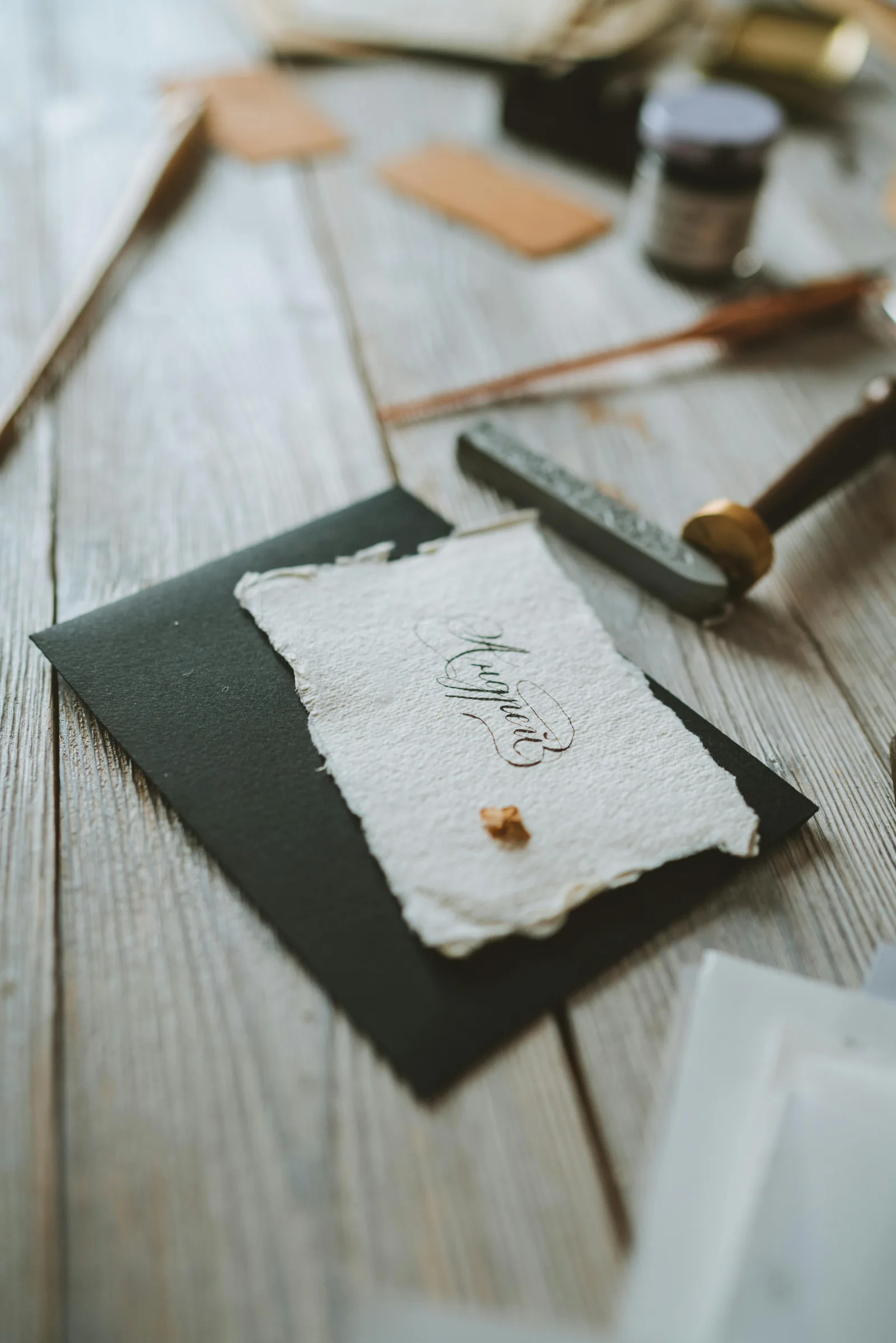
Working with a local artist or a small independent studio also keeps the project aligned with sustainable values, supporting small-scale, low-waste production rather than mass manufacturing. Hand-lettered calligraphy, even when reproduced through eco-conscious printing methods such as soy or vegetable-based inks, retains the warmth of something made by hand rather than generated from a template.
3. Weave in Language and Details That Are Unmistakably Yours
Personalization is not only visual. The wording of an invitation can reflect a couple's actual voice rather than a generic formal template. A short line about how the couple met, a nod to a shared inside joke, or wording in a second language that reflects family heritage all make an invitation feel unmistakably personal.
Details matter too. Listing the ceremony location by the nickname guests actually use, referencing a family recipe that will be served at dinner, or including a line of gratitude to parents who helped raise the couple, transforms a functional announcement into a small piece of storytelling that guests genuinely enjoy reading.
4. Pair Sustainable Materials With Thoughtful Extras
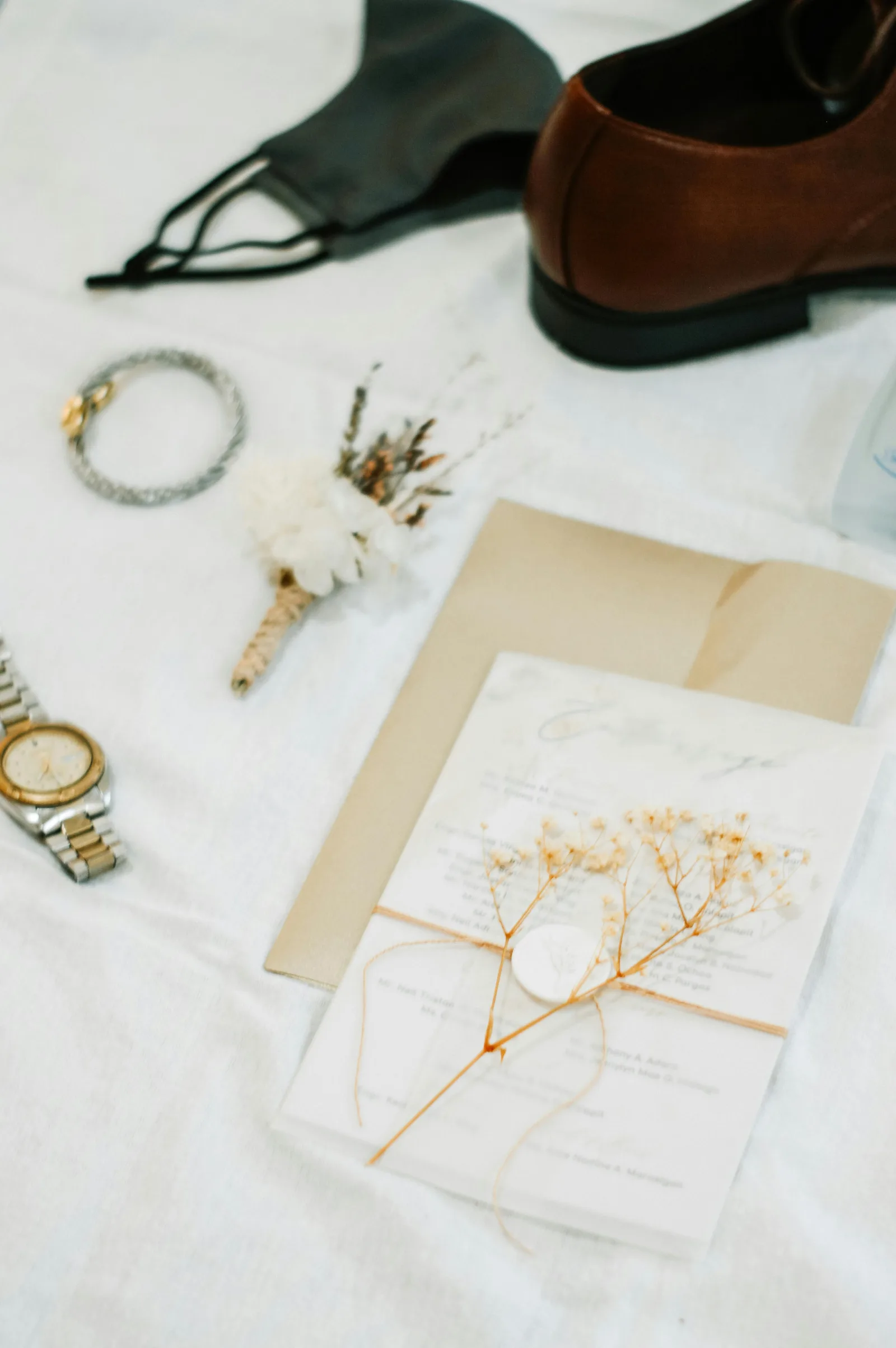
Small enclosures can carry a lot of personality without adding significant waste. A pressed flower from the couple's engagement bouquet, a strip of recycled kraft twine wrapped around the suite, or a wax seal stamped with initials all add texture and meaning while remaining low-impact when sourced thoughtfully.
Digital elements can also carry personalization sustainably. A QR code linking to a short video of the couple's story, or to an online wedding website with directions and registry details, reduces the number of printed enclosure cards needed while still giving guests a personal, informative experience.
5. Let the Format Reflect the Couple's Personality
Not every invitation needs to follow the traditional folded card format. Some couples are choosing accordion-style booklets printed on recycled paper to tell a fuller story, including the timeline of their relationship. Others are opting for a single, minimal card with a bold typographic statement that mirrors a couple who prefers understated design over elaborate detail.
The format itself becomes a form of personalization. A playful, adventurous couple might choose a map-style invitation printed on recycled stock showing the route from ceremony to reception. A couple grounded in tradition might prefer a classic letterpress design on cotton paper, simple, elegant, and unmistakably them.
Bringing It All Together
None of these five approaches require choosing between sustainability and personal expression. A single eco-friendly invitation suite can combine recycled paper, a hand-drawn motif, personal wording, a small natural enclosure, and a format that suits the couple's style, all while keeping environmental impact in mind. The result is an invitation that guests actually want to keep, rather than one that ends up in the recycling bin without a second glance.
It also helps to think about personalization as a sequence of small decisions rather than one big creative leap. Start with the material, since the paper stock often shapes what kind of artwork, ink, and finishing touches will look best. From there, wording and format can be layered in gradually, giving the couple room to test a few drafts before settling on the version that feels most like them. Working with a stationer who understands sustainable materials can also make this process easier, since they can suggest pairings, such as a specific ink that performs well on recycled cotton, that a couple might not think to research on their own.
Couples planning their own suite do not need to implement every idea at once. Choosing even one or two of these approaches, paired with a sustainable base material, is often enough to make an invitation feel deeply personal while staying true to eco-conscious values.
Frequently Asked Questions
1. Are eco-friendly wedding invitations more expensive than traditional ones?
Not necessarily. Recycled and seed paper have become widely available and are often comparable in price to standard cardstock. Costs typically rise with custom illustration or specialty printing rather than the eco-friendly material itself.
2. Can seed paper invitations be printed with detailed designs?
Yes, though seed paper works best with simpler layouts and bolder text, since its natural texture is less suited to fine, intricate detail than smooth cardstock.
3. How can couples reduce paper waste without eliminating printed invitations entirely?
Many couples send a single printed invitation and move enclosure details, such as accommodation lists or registry information, to a wedding website accessed through a printed QR code.
4. Is it possible to personalize invitations without hiring a designer?
Yes. Many small stationers offer semi-custom templates on eco-friendly paper, allowing couples to adjust wording, colors, and small details without commissioning fully custom artwork.
5. What is the most meaningful personalization detail for guests?
Wording that reflects the couple's real voice tends to resonate most, since guests immediately notice language that feels personal rather than generic, regardless of the paper or printing method used.
Final Thoughts
An eco-friendly wedding invitation does not have to feel like a compromise. When couples choose materials thoughtfully and layer in personal details, whether through artwork, wording, texture, or format, the result is an invitation that feels authentic from the very first envelope a guest opens.
The couples who leave the strongest impression are rarely the ones with the most elaborate stationery. They are the ones who let their invitation reflect who they actually are, while making a small, considered choice to reduce their impact on the planet. That balance of meaning and mindfulness is where a truly memorable invitation begins.